Côte d'Ivoire seeks $64.8bn for energy and mining
11 Nov 2026 · Côte d'Ivoire
Read the analysis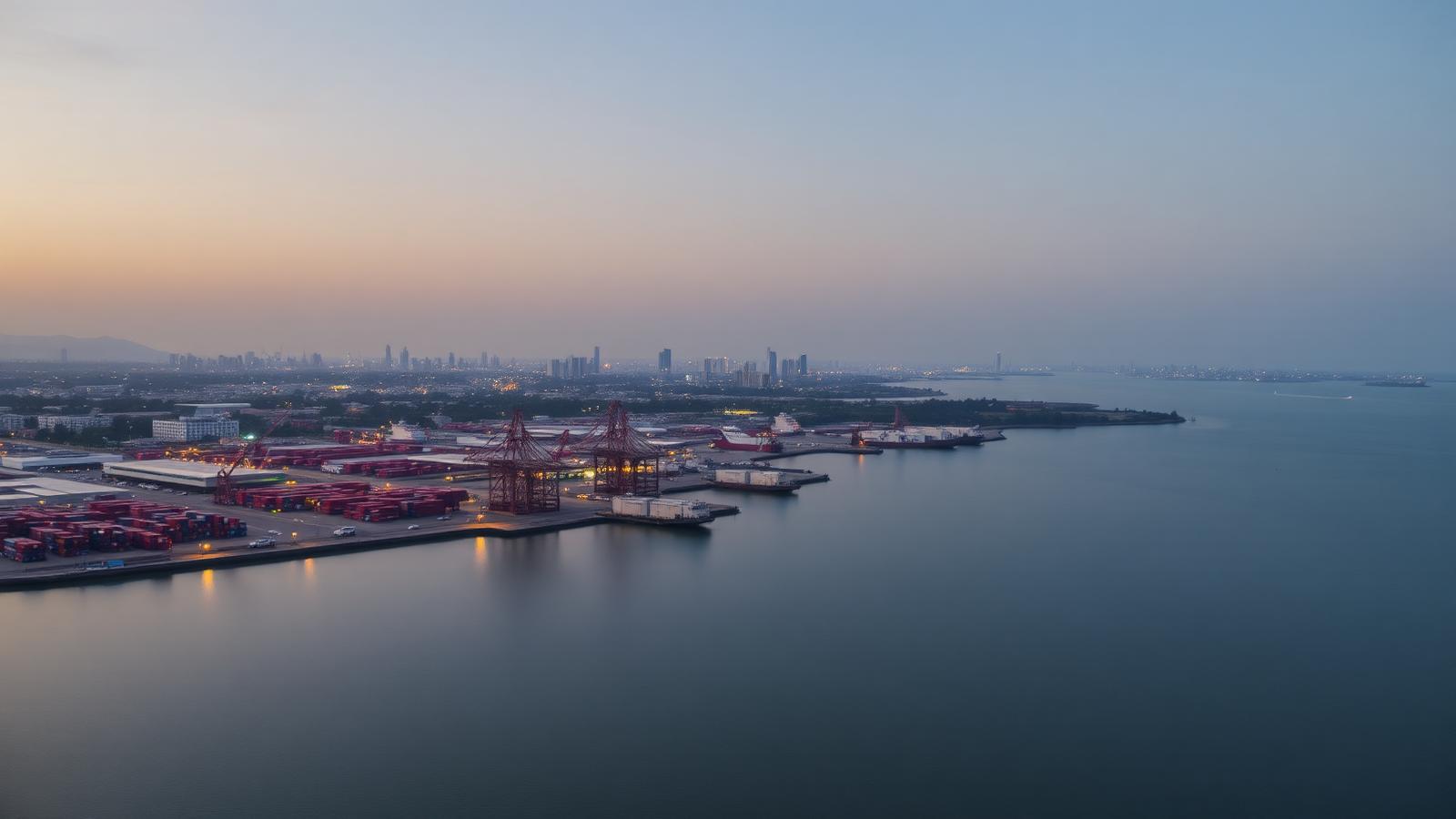
West Africa
West Africa's fastest-moving offshore story — Baleine has doubled national output in three years and Calao is next. PETROCI now operates its own mature fields, and that is where the near-term technology buyer sits.
Desk coverage from Cape Town and Stavanger
Saga's position in this market
Saga covers Côte d'Ivoire from Cape Town and Stavanger through our intelligence system, partner network and travelling principals.
Sector deep dives — Côte d'Ivoire
Côte d'Ivoire spans 322,000 square kilometres and has 32.7 million people. GDP reached roughly $100 billion in 2025. Oil output has doubled in three years on the back of Baleine. PETROCI Holding is the state NOC — fully state-owned since 2021 and taking 10 percent in most new production-sharing contracts.
National crude output averaged 63,050 barrels a day in 2025, up 43 percent on 2024, driven by Eni's Baleine field. Baleine produces over 57,000 barrels a day and 78 million cubic feet of gas a day. Phase 3 reached FID in May 2026 with a new FPSO, targeting 150,000 barrels a day; all gas goes to the domestic market. Calao South, found in February 2026, holds up to 5 Tcf of gas and 450 million barrels of condensate. Petrobras signed eight offshore contracts in September 2026, and Murphy confirmed oil pay at Bubale West-1X. PETROCI became sole operator of block CI-26 and the mature Espoir field in July 2026. The government targets 200,000 barrels a day by 2028.
Côte d'Ivoire produces about 92,000 tonnes of fish a year against demand above 733,000 tonnes; aquaculture contributes only around 8,500 tonnes. Tilapia is the priority species, and the FAO-backed FISH4ACP programme targets a nine-fold rise by 2031. Abidjan is a major tuna port, handling over 600,000 tonnes of sea products a year, including 250,000 tonnes of tuna.
TGS is the most visible Norwegian player. In October 2026 it launched its second seismic reprocessing project in six months — 14,691 square kilometres of 3D data, run with the hydrocarbons directorate and PETROCI. Norwegian well, subsea and offshore-logistics suppliers fit the work programme now forming offshore.
On Baleine and Calao, PETROCI is a partner and Eni picks the suppliers. The faster route is acreage PETROCI operates itself, such as CI-26 and the mature Espoir field. A low-capex well-stimulation pilot fits a capital-constrained NOC. Second track: subsea, pipeline-landfall and supply-base work as Baleine Phase 3 and the Calao gas developments move ahead.
Saga connects Norwegian and Nordic technology and service providers with operators and the national oil company, working in French and through local partners. We are building our presence in Côte d'Ivoire and provide market entry, commercial representation and technical due diligence.
Field intelligence · Côte d'Ivoire
11 Nov 2026 · Côte d'Ivoire
Read the analysis9 Nov 2026 · Côte d'Ivoire
Read the analysis9 Nov 2026 · Côte d'Ivoire · Drilling
Read the analysis9 Nov 2026 · Côte d'Ivoire · Subsea
Read the analysisWorking on a project in Côte d'Ivoire? We deliver Norwegian technology there, coordinated from Cape Town and Stavanger.
Talk to a partnerRelated markets — West Africa
Continue across the geography
← Previous · West Africa
Senegal
The strongest Norwegian corridor in West Africa. Long-standing Nordic bilateral programmes have built a relationship few competitors can match. Sangomar Phase 2 sits inside our energy thesis; we tell new principals to start here.
Next · West Africa →
Nigeria
Saga's volume market. NNPCL JVs, the indigenous majors and the marginal-field awardees form the largest cluster of brownfield-tech buyers on the continent. Lagos is in the calendar every quarter.
Start with a screening
Have a candidate well, asset or project in Côte d'Ivoire? Send it to us and we will return a written screening within ten working days.