East Africa
Kenya.
East Africa's fintech and blue-economy capital. Konza Technopolis, M-Pesa's data infrastructure, Mombasa port modernisation and a serious posture on fisheries surveillance make this a different shape of Saga play — and an important one.
Desk coverage from Cape Town and Stavanger
Saga's position in this market
Saga covers Kenya from Cape Town and Stavanger through our intelligence system, partner network and travelling principals.
Sector deep dives — Kenya
The country today
Kenya has a population of around 55 million. The political moment is reformist. The Ruto administration is reshaping energy policy toward local private operators and away from the major-IOC model. The Ministry of Energy has cut taxes and accelerated licensing for the Turkana operator. Kenya is not waiting for an IOC; it is building a domestic independent sector. The other political signal: the National AI Strategy positions the country as an East African innovation hub. Konza Technopolis is a flagship government-backed tech park; leading universities are restructuring computer-science curricula to integrate industry AI use cases.
For a Norwegian principal, Kenya is two stories: the Turkana oil logistics challenge (narrow, technical, near-term) and the fintech, fisheries and port-automation platform (broad, structural, multi-year).
Energy — oil and gas
The Turkana Basin holds light crude in the South Lokichar, Kungunut and Amosing fields. No commercial production exists. Tullow appraised the field through the late 2010s; Gulf Energy, a Nairobi-based energy trading company, has acquired the Turkana portfolio and is targeting first oil from South Lokichar with phased production growth.
The crude is onshore, low-pressure and immature, with high water cut. Separation, dehydration and export logistics are the dominant technical challenges. NOCK, the national oil corporation, holds participating interest but has delegated commercial operator authority to Gulf Energy. The fiscal framework follows PSC terms. Kenya's amended Petroleum Act now permits faster-track licensing to domestic operators — a deliberate policy shift away from major-IOC models.
The technical character is unconsolidated sand, not tight carbonate. High water cut dominates cost and risk. Well-design emphasis is robust completion architecture — open-hole screens with sand control, dual-tube safety-net completions — rather than stimulation. The traditional multilateral thesis is weaker in Kenya than in Tanzania or Mozambique.
Gulf Energy is a trader, not a technology adopter. Tullow historically relied on the major service companies. NOCK is a minority investor without technical decision-making authority. Technology adoption is indirect: drilling and completions will be subcontracted to international service companies. A Norwegian completion principal could position as a sand-control specialist or water-handling innovator, but the pathway is advisory and niche.
Risks are substantial. Road transport at full ramp-up is logistically heavy; estimated transport cost runs high relative to current crude prices. Margins are sensitive to commodity price. Gulf Energy is betting on a railway upgrade, but rail construction in Kenya is habitually delayed. The operator's inexperience is another variable. Development capex is dependent on debt financing not yet fully arranged. First oil could slip if crude prices weaken.
The blue economy
Kenya's marine fisheries (Indian Ocean EEZ) produce a meaningful annual volume across small pelagics, tuna and large pelagics, demersal species, and prawns and shellfish. Coastal artisanal fisheries account for the majority of coastal employment. Lake Victoria (Kenya sector) is a significant inland producer. IUU exposure is moderate; enforcement is improving.
Aquaculture is the growth story. Kenya's inland aquaculture is among Africa's most productive, dominated by Nile tilapia and African catfish, mostly in freshwater ponds and Lake Victoria cages. Coastal marine and brackish-water aquaculture has emerged recently in southern coastal counties, with integrated multi-trophic trials showing strong profitability. Government targets are aggressive. Feed supply is expanding; hatchery genetics is a regional strength. Disease management is improving after recent tilapia lake virus episodes.
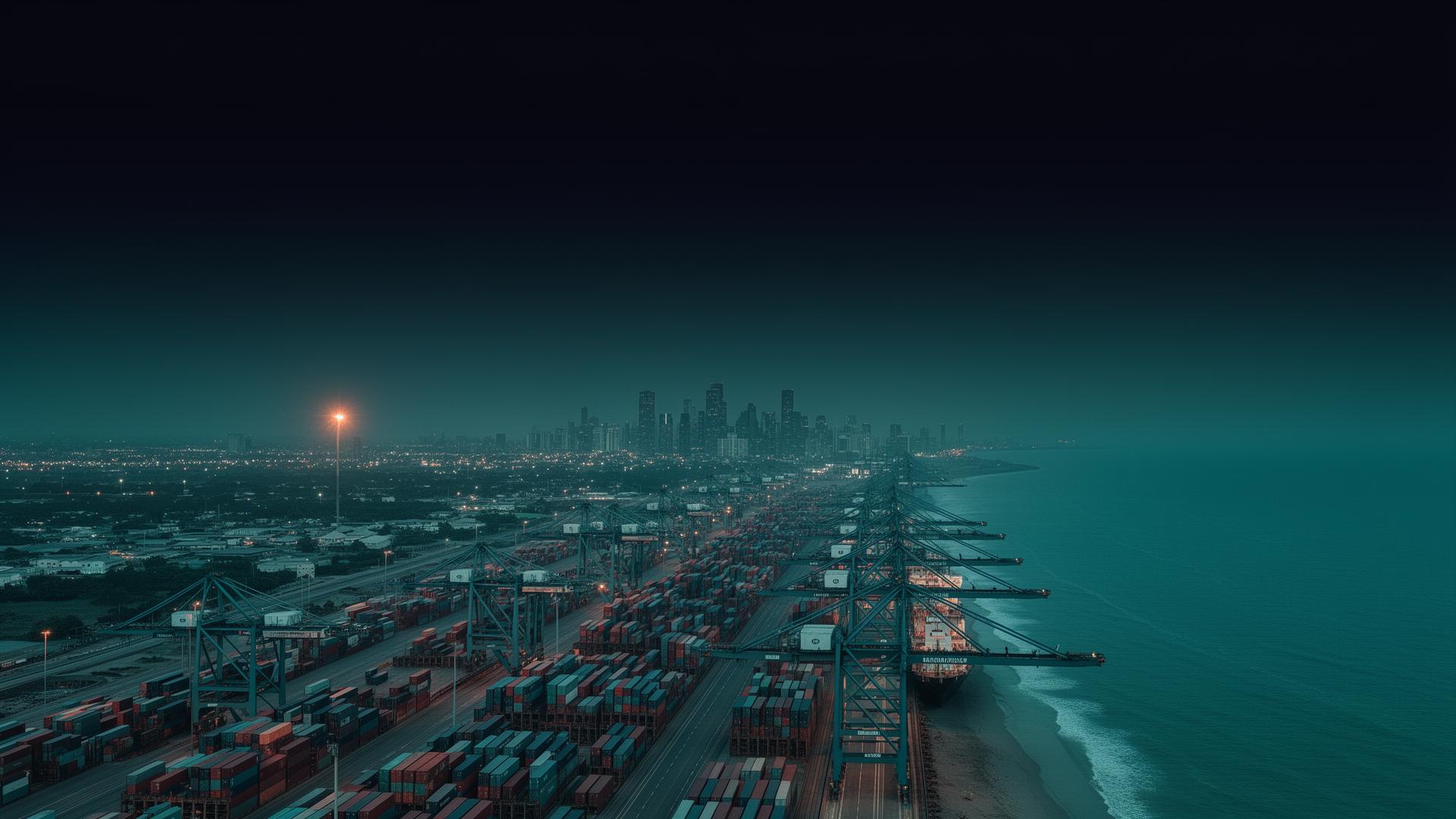
Mombasa is East Africa's largest port. Kilindini is the deepwater facility. Lamu Port is under development for coal and container traffic. Offshore wind potential exists along the southern coast.
The intersection with Saga's mandate is multi-vector. Turkana crude transport via road and rail will parallel fish-supply routes; potential exists for shared logistics hubs and cooling facilities. Aquaculture technology could be co-financed with Nordic development agencies. Port automation at Mombasa is another revenue opportunity.
The Norwegian–Kenya corridor
Norway's embassy in Nairobi opened in 1964. The bilateral relationship is strong in development cooperation. Earlier oil-and-gas cooperation programmes wound down recently; fisheries cooperation remains active, supporting Lake Victoria fisheries management, tilapia hatchery networks and coastal-aquaculture pilots.
Equinor's presence in Kenya is minimal; historical exploration blocks have been exited. Kenya's differentiation from Tanzania is significant: Equinor is not a working introduction route here. But Kenya has direct partnerships with Nordic universities through Konza Technopolis. Strathmore University is an explicit bridge into Kenya's AI ecosystem.
The political climate is private-sector friendly and Western-open. The Ruto administration is less nationalist on energy than its predecessor.
What Saga sees
Turkana South Lokichar is not a traditional completion-vendor play. The reservoir is unconsolidated sand; water-cut management is the dominant challenge, not stimulation. But Gulf Energy's operational inexperience and FID vulnerability create advisory opportunities: technical due diligence on development plans, well-design QA/QC on sand-control architecture, and workforce development. The traditional sweet spot is weaker here than in Tanzania or Mozambique. Adjacent plays are strong.
Fisheries surveillance and IUU detection (near-term) run through KMFA vessel monitoring and catch-quota AI, with Norwegian fisheries-development co-funding available. Aquaculture hatchery automation and disease early-warning could partner with universities and Konza Technopolis. Turkana oil logistics optimisation is an AI-driven supply-chain play. Offshore-wind resource assessment and port automation are longer-term.
The near-term window in Kenya is blue-economy and infrastructure modernisation, not oil-focused engagement. Kenya is where Saga's work shifts from pure hydrocarbon engagement to fisheries, port and energy-infrastructure opportunities.
How we work in Kenya
Saga works in Kenya through standing relationships at Strathmore University's CIPIT, the Kenya Ministry of Energy and the Norwegian fisheries-development ecosystem. We connect Norwegian principals to Konza Technopolis tech partners, work with KMFA on fisheries surveillance scope and coordinate with port operators on automation feasibility. We offer aquaculture technology transfer, market entry strategy for Norwegian energy and infrastructure vendors, and fisheries-management advisory. If you are representing a principal in aquaculture, fisheries surveillance or East African port and energy infrastructure, Kenya is a relevant entry point.
At a glance
- Population: ~55 million
- Hydrocarbons: Oil; Turkana Basin (Gulf Energy operator, first oil targeted)
- Principal NOC: NOCK
- Norwegian footprint: Embassy Nairobi · long-standing fisheries-development cooperation · Strathmore University partnerships · Konza Technopolis tech ecosystem · Safaricom fintech platform
- Saga focus areas: Fisheries surveillance and IUU detection · Aquaculture hatchery automation and tilapia genetics · Port automation (Mombasa) · Offshore-wind resource assessment · Turkana oil logistics optimisation · Mobile-money fintech integration
Live intelligence — Kenya
Track deals, operator moves and regulatory signals for Kenya on Saga's intelligence platform.
Related markets — East Africa
Continue across the geography
← Previous · East Africa
Tanzania
Equinor's long operator history with TPDC is the spine of the country's gas story. The Lindi/Mtwara appraisal programme is the most coherent pre-development opportunity in East Africa, with layered Nordic warm-intro paths.
Next · East Africa →
Rwanda
East Africa's most-disciplined small economy and the regional convening capital. Kigali is the conference and financial-services hub of choice; Lake Kivu methane is a unique energy story. A services and blue-economy market, not upstream.
Start with a screening
Have a candidate well, asset or project in Kenya? Send it to us and we will return a written screening within ten working days.