West Africa
Ghana.
Tullow's Jubilee and TEN are the live conversations on well-life extension and cost discipline. Aker Energy's portfolio and the Pecan field add a second axis. A clean path through Accra for a focused completion or subsea play.
Desk coverage from Cape Town and Stavanger
Saga's position in this market
Saga covers Ghana from Cape Town and Stavanger through our intelligence system, partner network and travelling principals.
Sector deep dives — Ghana
The country today
Ghana has a population of around 35 million. Proven oil reserves are concentrated in the Jubilee field; natural gas reserves are substantial but underdeveloped. The cedi has stabilised meaningfully from earlier lows, supported by gold exports and improved macroeconomic discipline. The Mahama administration has signalled commitment to fiscal consolidation and energy-sector continuity.
For a Norwegian principal, Ghana is a secondary West African market. Jubilee is a maturing Atlantic brownfield where modern completion technology can directly address production decline and field-life extension.
Energy — oil and gas
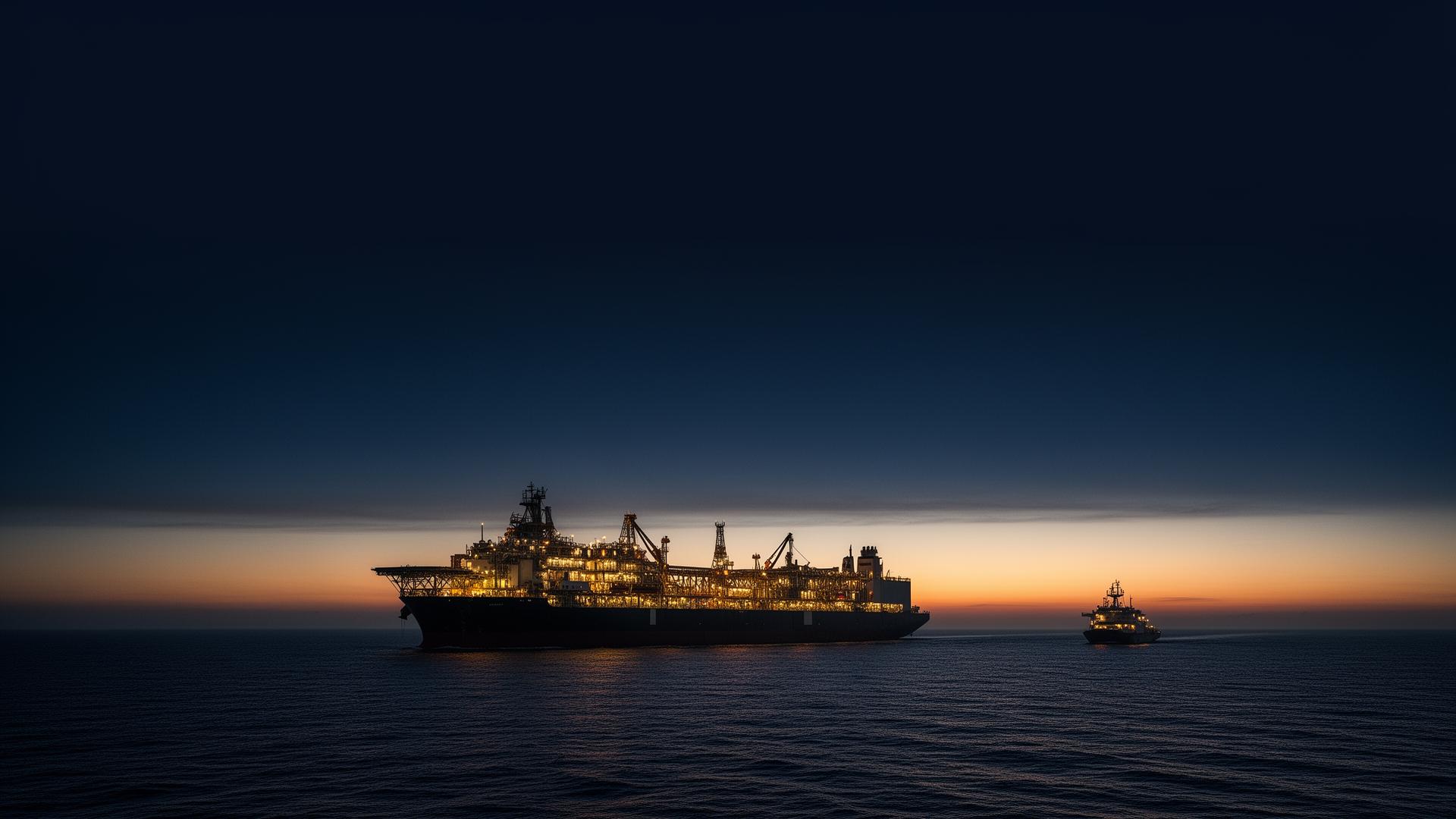
The Jubilee field came onstream in 2010 and is the country's anchor producing asset. Production has been challenged by higher-than-expected water cut in certain wells and by riser-stability issues; operators have deployed riser-based gas lift to counteract water production and stabilise output.
The Petroleum Commission and GNPC form a two-tier regulatory structure. Fiscal terms are PSC-based, with government take in line with regional norms on mature fields and lighter on frontier acreage. The regulatory environment is regarded as transparent and predictable by regional standards. Tullow and Kosmos have agreed to extend the production licences for Jubilee and TEN, with GNPC's share increasing on a phased basis later in the licence life.
Gas reserves are significant but development lags oil. TEN began production in 2016 and is in decline phase but has greater pressure-maintenance potential through enhanced waterflood. Tullow has agreed to acquire the TEN FPSO, eliminating lease costs and improving field economics. Pecan Energies (the post-Aker Energy entity controlled by the Africa Finance Corporation) is pursuing FID for the Deepwater Tano/Cape Three Points block.
Jubilee is in extended-production phase, with natural depletion driving annual production declines absent new drilling. Tullow's near-term drilling programme is designed to arrest decline and modestly increase production. This is the part of the field life where foreign completion expertise adds value: water-cut trends and riser corrosion are accelerating well-abandonment forecasts.
The blue economy
Ghana's marine fisheries are central to coastal livelihoods. Capture fisheries dominate domestic fish production, with artisanal fishing accounting for the majority of marine output. Industrial distant-water fleets, predominantly foreign-flagged, access Ghana's EEZ under licence and IUU fishing depresses stock sustainability. The blue food system supports several hundred thousand jobs and contributes a meaningful share of GDP.
Aquaculture is expanding. Tilapia and catfish dominate cultured species, with cage culture concentrated in southern coastal zones and inland freshwater bodies. The sector has been hampered by high feed costs and significant post-harvest losses. The Ministry of Fisheries and Aquaculture Development is signalling investment into a Blue Food Innovation Hub aligned with the wider 24-hour economy agenda.
Ghana operates two major ports — Tema (container-focused) and Takoradi (breakbulk). Offshore wind potential is limited in the Gulf of Guinea due to low and seasonal wind resources. Maritime spatial planning is underdeveloped; fishing grounds and offshore infrastructure compete without formal zoning.
For a Norwegian principal, the blue-economy opportunity in Ghana is indirect. The Ministry of Fisheries is pursuing IUU detection and fisheries-surveillance technology. The primary play remains oil and gas.
The Norwegian–Ghana corridor
Norway maintains an embassy in Accra and modest development cooperation, with engagement in democratic governance, education and fisheries-sector support. Equinor exited West Africa operations years ago and has no producing interests in Ghana. Aker Energy's acquisition by AFC severed Norwegian operational control of the offshore portfolio.
Yara has regional fertiliser distribution. The wider Nordic diplomatic and commercial footprint is light. The EU is engaged through trade and security partnerships; the UK has historic commercial ties with Ghana through the upstream operator base.
A Saga entry point via Tullow runs through the operator's London-based industry network. Ghana is a country where the Norwegian corridor is thinner than in Nigeria or Senegal, but the operator is solid and the regulatory environment is stable.
What Saga sees
Jubilee is maturing and faces production decline driven by water cut and natural reservoir depletion. Tullow is the operator, technology-receptive and cost-disciplined. A one-well mechanical-multilateral or water-shutoff pilot at Jubilee would directly address operator pain and generate reference-customer value. The tight-carbonate analogues in Egypt and the Gulf are reference customers that speak the same technical language.
TEN field waterflood optimisation is a secondary play; advanced injectivity-matching and pattern-optimisation tools have a role in extending recovery. Pecan Energies' DWT/CTP block represents frontier deepwater acreage and would be a credible technology insertion point if FID progresses, given the operator's limited in-house completion capability post-acquisition.
The cedi's recent stability is the primary macro variable. A sharp commodity downturn would re-stress the currency and chill capex. A material deepwater discovery would also pull political capital toward exploration upside, potentially delaying brownfield redevelopment.
How we work in Ghana
Saga covers Ghana from our Cape Town and Stavanger desks with regular travel to Accra. Our read on the market sits alongside our relationships with Tullow through London-based industry contacts and the wider African energy editorial ecosystem. For a Norwegian principal, we provide market entry strategy, technical diligence on Tullow and GNPC, and deal structuring.
Talk to Saga before you commit capital or partnership to Jubilee or TEN.
At a glance
- Population: ~35 million
- Hydrocarbons: Oil; Jubilee field as the anchor; significant underdeveloped gas
- Principal NOC: GNPC (Ghana National Petroleum Corporation)
- Norwegian footprint: Embassy Accra; legacy Aker Energy ties post-acquisition; modest Yara distribution
- Saga focus areas: Jubilee water-shutoff and well-life extension · TEN field waterflood optimisation · Pecan Energies FID support (deepwater)
Live intelligence — Ghana
Track deals, operator moves and regulatory signals for Ghana on Saga's intelligence platform.
Related markets — West Africa
Continue across the geography
← Previous · Central Africa
Democratic Republic of the Congo
A continental-scale country with a small upstream and an enormous adjacency. Perenco's Muanda offshore is the brownfield play; cobalt, copper and Lake Kivu methane are the second axis. We work the DRC selectively, not generally.
Next · West Africa →
Benin
A small, stable francophone market whose strategic value is its port. Cotonou serves landlocked Niger and northern Nigeria; Glo-Djigbé is the most credible industrial platform in the region. Trade and logistics, not upstream.
Start with a screening
Have a candidate well, asset or project in Ghana? Send it to us and we will return a written screening within ten working days.