Southern Africa
South Africa.
Saga's regional capital. Cape Town and Stavanger are the two ends of the same desk. The Upstream Petroleum Resources Development Act, the Orange Basin step-out and the Norfund-anchored renewables platform define the next 24 months.
Saga office
Saga's position in this market
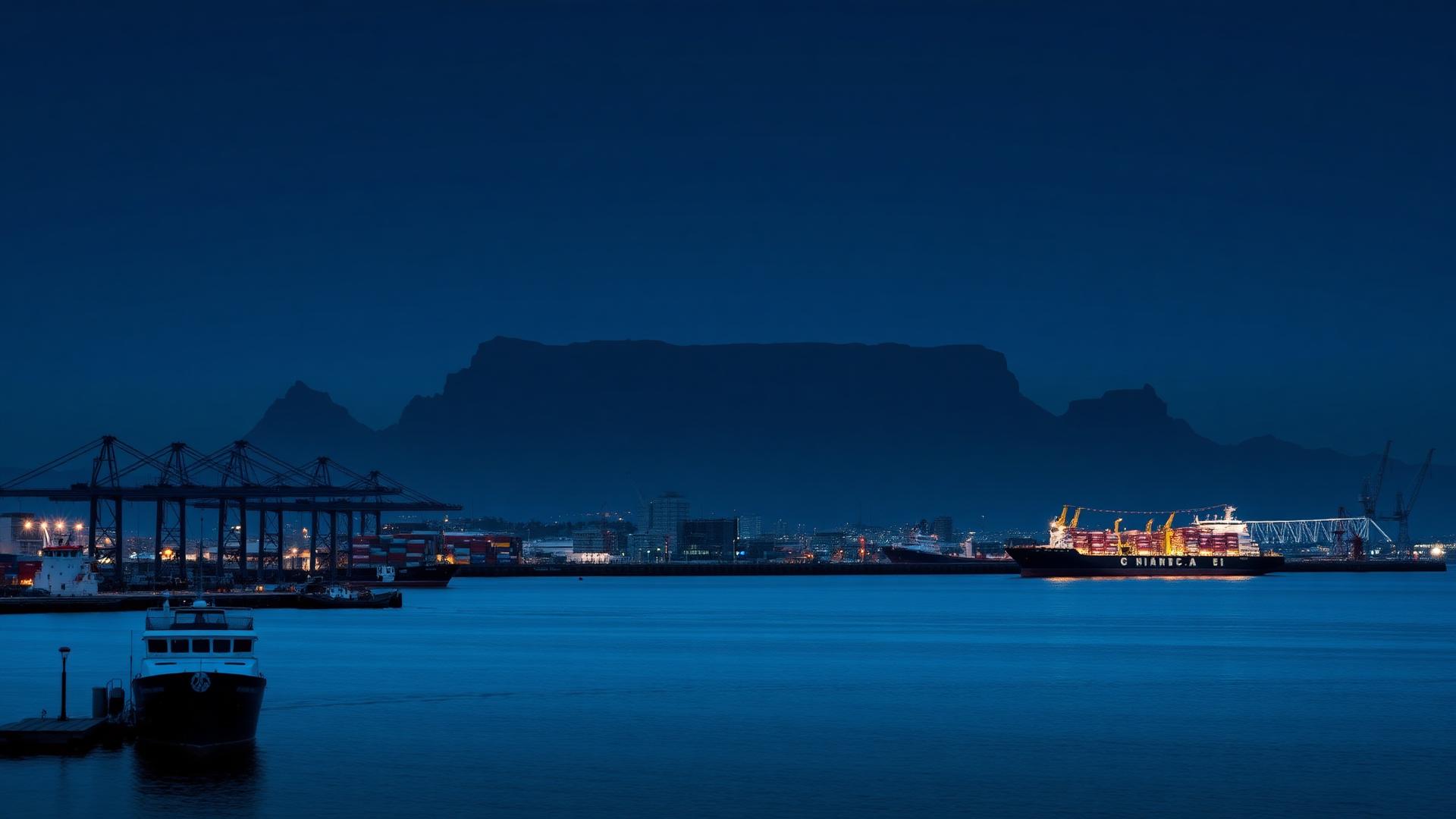
Saga's office in Cape Town coordinates commercial engagements in South Africa.
Sector deep dives — South Africa
The country today
South Africa's 63 million people anchor Africa's most diversified economy — GDP of roughly USD 380 billion, an industrial base built on mining and processing, and a financial system that clears most of the region's deal flow. The Government of National Unity formed in mid-2024 has held; President Cyril Ramaphosa governs in coalition with the Democratic Alliance and minor partners, and the centre of gravity in cabinet on energy and finance has moved toward investor-oriented reform. Eskom load-shedding eased through 2024-2025 as IPP capacity came online and grid availability stabilised, but the macroeconomic story is still about getting fixed investment back to ratios the country had a decade ago. South Africa is on Saga's map for the simplest reason — it is our home base. Cape Town is where the firm runs, where the regional banks sit, and where the technical reads on Namibia, Mozambique, Angola and the rest of the corridor get pressure-tested before they go to Stavanger.
Energy — oil and gas
South Africa is a small upstream country in resource terms but a large energy market. Domestic crude production is negligible; refining capacity has been shrinking — Engen's Durban refinery converted to a terminal, Caltex/Astron in Cape Town and Sapref in Durban have been through extended outages, and the country imports roughly 70 percent of its refined product. The story that matters is offshore gas. The Outeniqua Basin, off the southern coast, holds the Brulpadda and Luiperd discoveries — together about 3.4 trillion cubic feet of gas and roughly 190 million barrels of condensate, with Luiperd the larger of the two at 2.1 TCF and 112 million barrels. These were discovered by TotalEnergies on Block 11B/12B in 2019 and 2020 and were, for a time, the most consequential frontier finds on the African Atlantic margin south of Namibia.
That story changed in 2024. TotalEnergies, with QatarEnergy and CNR, exited Block 11B/12B after failing to reach pricing terms with PetroSA and Eskom on offtake — the gas was found, the buyers were obvious, the price was not. Africa Energy Corp and partners retain a position on the block but the operator role is open. TotalEnergies remains in South Africa as operator on Block 3B/4B in the Orange Basin, the same play system that has made Namibia the most-watched frontier in Africa, and a 2026 drilling campaign is in preparation. PetroSA, the state operator, runs the Mossel Bay gas-to-liquids facility — the F-A complex feeding it is in long decline and the plant is increasingly dependent on imported LNG via Coega or new offshore gas to keep running.
The regulatory frame has been the binding constraint. The Upstream Petroleum Resources Development Act was assented to in 2024 and draft regulations were published for comment in 2025. UPRD replaces the petroleum chapter of the MPRDA with a dedicated upstream regime, separates the regulator from PetroSA, and — if the regulations land cleanly — gives operators the legal certainty they have been waiting for. The Petroleum Agency South Africa is being reconstituted to administer it. The next 12 to 24 months will determine whether UPRD attracts a return wave of IOCs, an Orange Basin step-out into South African waters, or another cycle of stalled licensing. South Africa is not going to be a major producer. It can be a credible offshore gas market and a re-export hub, and it can be a sandbox for Nordic decommissioning, integrity-management and gas-processing capability that translates directly to Namibia and Mozambique.
The blue economy
South Africa has the most developed blue economy on the continent. The wild-capture fishery lands roughly 600,000 tonnes a year — hake the anchor species, with horse mackerel, sardine, anchovy and tuna — and is regulated through total-allowable-catch and rights-allocation regimes administered by DFFE. The deep-sea trawl fishery is MSC-certified for hake and is the most institutionally mature in the SADC region. Saldanha Bay on the West Coast is the centre of the country's marine aquaculture: abalone is the dominant cultured species, with fourteen commercial farms producing roughly 1,650 tonnes a year worth around R1 billion, alongside a smaller mussel and oyster sector in Saldanha Lagoon and Algoa Bay. Cage-based finfish at scale has not yet landed; trial sites for yellowtail and dusky kob exist but the regulatory and biosecurity framework is still being built.
The ports are the other half of the blue-economy story. Cape Town and Durban are the two natural service hubs for the Atlantic and Indian Ocean offshore industries, with Saldanha Bay specialised in iron-ore, ship-repair and a developing offshore-wind staging brief. Mossel Bay services the southern offshore. The intersection with oil and gas is direct: any offshore gas development on Block 11B/12B, Block 3B/4B or further east translates immediately into supply-base, ROV, fabrication and decommissioning work routed through Cape Town and Saldanha. For Norwegian subsea, vessel-services and aquaculture-technology companies, South Africa is both a market and a forward base for the rest of the corridor.
The Norwegian–South Africa corridor
Norway's bilateral footprint in South Africa is one of the deepest on the continent. The Royal Norwegian Embassy sits in Pretoria, with an Innovation Norway office in Johannesburg and honorary consulates in Cape Town and Durban. Norfund's largest African renewable platform — the recent NOK 850 million investment alongside KLP into Anthem, a developer with an 11 GW South African solar, wind and storage pipeline — sits inside a longer pattern: Norfund's earlier capital into Mulilo, climate-fund commitments through the Climate Investment Fund, and a steady drumbeat of co-investment with Standard Bank, Old Mutual and Investec. Equinor maintains a Johannesburg presence focused on energy-transition partnerships rather than upstream. DNV is established in Cape Town. Yara has fertiliser distribution. Telenor is not present at scale but Aker BP and Aker Solutions both run relationships with South African EPCs and yard groups.
For a Norwegian principal, the corridor in South Africa works the way it should. Visa logistics are straightforward. Payment flows clear in rand and in USD without friction. The warm-intro shape is Norfund-anchored on the renewables side, embassy-anchored on the diplomatic side, and SPE-anchored on the oil-and-gas side — Cape Town's SPE section and the AAPG affiliate run an active calendar of operator briefings that put the technical leads of Sasol, PetroSA, Africa Energy Corp and the returning offshore licensees in the same room three or four times a year.
What Saga sees
South Africa is the country where a Nordic principal can land in the morning, sign a term sheet that afternoon, and route the resulting work into a project anywhere from Saldanha to Lindi. The next twelve months are about three things, in order of weight.
First, the Orange Basin step-out. TotalEnergies' planned drilling on Block 3B/4B is the single most consequential offshore campaign in South African waters since the Brulpadda well. A commercial discovery resets the regulatory math, the IOC re-engagement question, and the commercial case for offshore-gas-to-power. A Nordic subsea, completion or integrity-management vendor that has positioned with TotalEnergies' Cape Town team and with the supply-base operators in Saldanha and Mossel Bay is well placed to ride the next wave whether the discovery lands here or migrates to Namibia.
Second, renewables and grid-edge are where the Norwegian capital is. Norfund's Anthem position is the largest single Norwegian renewable bet on the continent. The pipeline is real, the offtake is the binding question, and grid-connection is the technical question. There is a clear Nordic role in storage, hybridisation, grid software and EPCM execution that is not yet contested.
Third, decommissioning and integrity are the quiet brownfield play. PetroSA's offshore complex, the older Mossel Bay infrastructure and the ageing FPSO fleet routed through Cape Town and Saldanha for repair are a steady-state market for Norwegian decommissioning, well-integrity and subsea-inspection capability that travels well to the rest of the corridor.
The risks are familiar. UPRD regulations need to land cleanly. Eskom needs to keep stabilising. The fiscal deficit needs to behave. None of these are deal-breakers; all of them are reasons to move now rather than wait.
How we work in South Africa
Saga is in Cape Town. We are at the operator briefings, the SPE evenings and the Norfund-portfolio reviews. We work directly with the Norwegian Embassy in Pretoria, with Innovation Norway in Johannesburg, and with Norfund's local team. For a Norwegian principal, we offer market entry, commercial representation, technical due diligence on operators and EPCs, ministry liaison, and on-the-ground project management from the Cape Town desk. South Africa is not a country we visit. It is a country we live in. If you are weighing South Africa as the regional anchor — talk to Saga first.
At a glance
- Population: 63 million
- GDP: USD 380 billion (2025)
- Hydrocarbons: Net importer of crude; offshore gas — Brulpadda 1.3 TCF + 80 mmbbl, Luiperd 2.1 TCF + 112 mmbbl
- Principal NOC: PetroSA
- Norwegian footprint: Embassy Pretoria · honorary consulates Cape Town and Durban · Innovation Norway Johannesburg · Norfund + KLP NOK 850m into Anthem (11 GW pipeline) · Equinor Johannesburg · DNV Cape Town · Yara distribution
- Saga focus areas: Orange Basin offshore re-engagement · Renewable-energy platform support and grid-edge · Decommissioning and integrity management · Saldanha aquaculture build-out
Live intelligence — South Africa
Track deals, operator moves and regulatory signals for South Africa on Saga's intelligence platform.
Related markets — Southern Africa
Continue across the geography
Start with a screening
Have a candidate well, asset or project in South Africa? Send it to us and we will return a written screening within ten working days.