Southern Africa
Mozambique.
Mozambique LNG has restarted. Cabo Delgado has stabilised but is not invisible; Coral Sul FLNG continues to produce; Coral North sequences in. Norad's Fish for Development programme has been active here for nearly two decades.
On-the-ground partner · working with our Cape Town and Stavanger offices
Saga's position in this market
Saga works in Mozambique through an on-the-ground partner, coordinated from Cape Town and Stavanger.
Sector deep dives — Mozambique
The country today
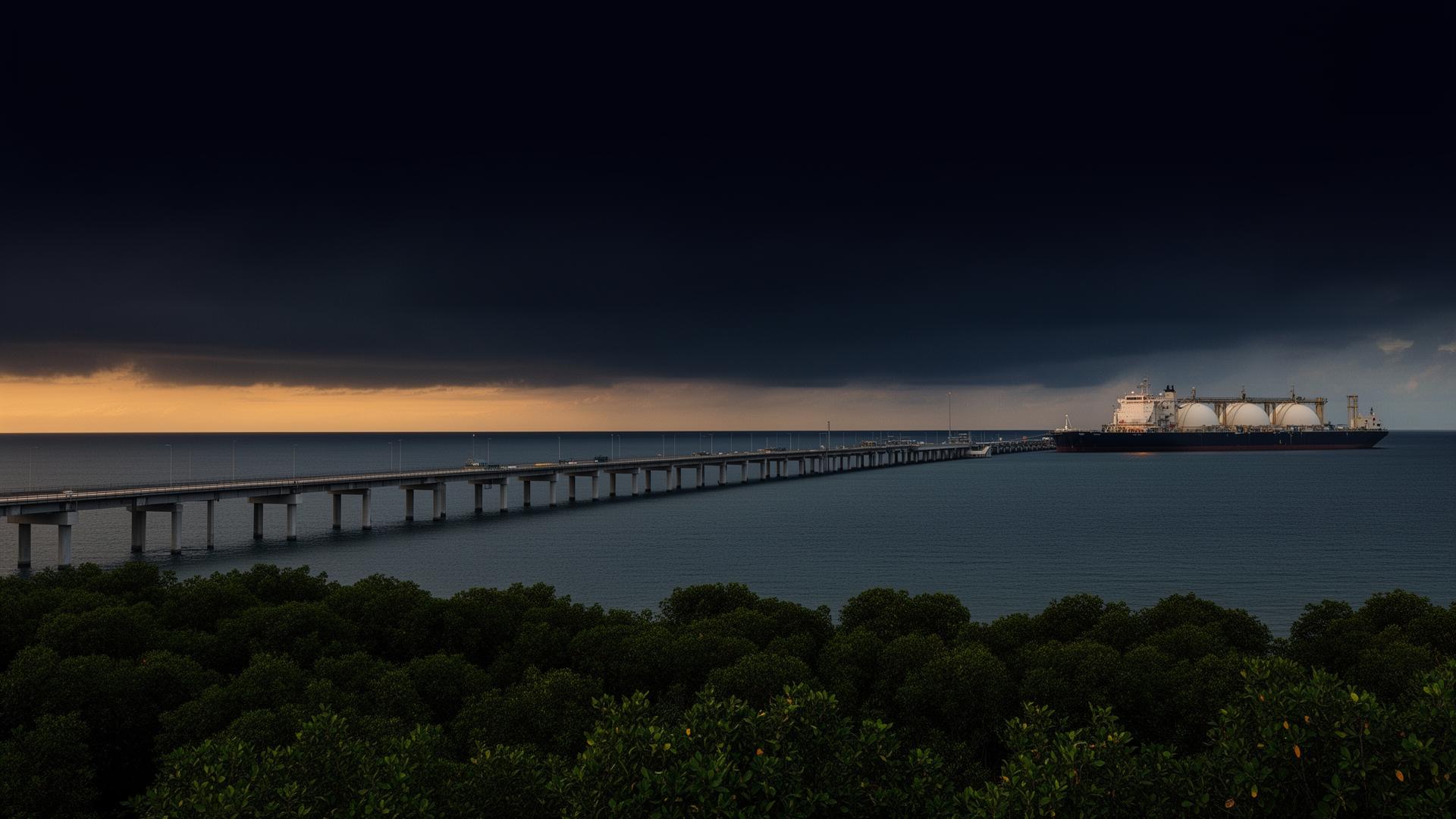
Mozambique's coastline is shaped by energy, fisheries and regional trade. The political moment is clear: the Chapo administration has restarted the Mozambique LNG project after several years of Force Majeure suspension. The full restart announcement signals that large-scale gas development is moving back to execution phase in the Rovuma Basin. Mozambique sits on a substantial proved-gas reserve base across Areas 1, 3 and 4. It is a gas exporter in the making, and that export pathway will reshape the region's energy economics.
For a Norwegian principal, Mozambique is where two decades of Norwegian-supported fisheries work meets the deepwater expertise of TotalEnergies and the wider operator base, and where a small firm can know the operators personally.
Energy — oil and gas
The Rovuma Basin is Mozambique's hydrocarbon story. Coral South, an Eni-led FLNG, has been producing since 2022 from Area 4 but is isolated from domestic infrastructure. The real milestone is Mozambique LNG. TotalEnergies, as operator, has announced a full restart following environmental remediation and security clearances. The Golfinho-Atum field in Area 1 is mature on seismic and well control; the reservoir is tight gas with predictable water sensitivity. The project design holds. First gas is forecast later this decade. The path to production runs through the Afungi peninsula south of Palma, where the onshore terminal and export facilities are under construction.
The operating landscape involves TotalEnergies leading development, with several minority stakes across Areas 1 and 4. ENH, the national oil company, holds equity across all licensed blocks. Government take at plateau is broadly aligned with regional norms under stable PSC frameworks. The fiscal terms are known; the investors are known; and the project is in execution.
Mozambique LNG is brownfield-mature but technically challenging. The Golfinho-Atum tight-gas pay demands stimulation: coil-tubing applications, multilateral well designs and selective-zone perforation work. The field is water-sensitive, which means completion quality is critical. TotalEnergies has a track record of purchasing foreign completion and stimulation tech from Angolan brownfields, and that appetite carries to Mozambique. Coral North, the second FLNG in Area 4, has moved past FID. Deviated appraisal wells tie back to processing; the active drilling window is open.
TotalEnergies has acknowledged a significant budget increase on Mozambique LNG against the original FID. Inflation, supply-chain delays and security costs on site are eating into estimates. Any further delay pushes first gas later, compressing the window for new technology integration. Operators watch financing trends across East African energy infrastructure carefully: shifts toward non-Western lending can carry through into procurement preferences for pumps, compressors and control systems.
The blue economy
Mozambique is one of Africa's largest shrimp exporters. Annual marine catch is split roughly four-to-one in favour of artisanal fishing, with black tiger and Indian white prawns dominating the export side. Export markets are primarily European and Asian. Mangrove habitats in the south are under pressure from land conversion. More significant is IUU fishing: foreign distant-water vessels operate illegally in Mozambican waters, with transhipment at northern ports. Government estimates of resource-value loss from illegal fishing are substantial.
Aquaculture is nascent. There are inland tilapia operations on Lake Cahora Bassa with breeding facilities and a land-based nursery, but the sector lacks coordinated hatchery infrastructure and disease-control protocols. Tilapia lake virus has affected inland ponds. Feed supply is intermittent. No Norwegian cage-system technology has been deployed; the opportunity is real.
Beira, Maputo and Nacala are the main port terminals. Beira handles container traffic; Maputo is the international gateway for the southern region; Nacala is a coal-export hub. The Afungi port development for Mozambique LNG will require specialised quay construction and LNG-carrier logistics — an intersection of oil-and-gas and regional shipping that Saga understands well.
The Norwegian–Mozambique corridor
Norway's embassy in Maputo has operated since 1976. The bilateral relationship runs deep through Norwegian development cooperation. Earlier oil-and-gas cooperation programmes wound down recently, but fisheries cooperation remains active, supporting artisanal fisheries governance, IUU enforcement and aquaculture pilots in the southern provinces. Equinor held exploration acreage north of the Rovuma Basin in the pre-2015 era but exited; there are no current Equinor operations.
TotalEnergies' presence dominates the energy conversation. The upstream technical committee includes Norwegian advisors and service-sector partners. ENH leadership has worked with Norwegian engineering and consulting firms on HSE audits and standards adoption. The Chapo administration is Western-leaning, which creates a constructive diplomatic temperature for Nordic technology introduction. At the same time, non-Western equity has grown in the basin through Asian and Gulf farm-ins, which means Western technology adoption needs to be sequenced before procurement preferences harden.
What Saga sees
The near-term story is Coral North appraisal drilling, not the Mozambique LNG megaproject scale. Operators will drill multiple deviated wells targeting shallow-gas tiers. If tight-gas pay is confirmed, coil-tubing stimulation and advanced perforation design become real procurement decisions. The working path into the operator base runs through East and West African operator networks where Saga has standing — this is the entry point.
Mozambique LNG ramp-up will come post-first-gas. Once production begins, choke management, ESP selection and water-cut mitigation will drive efficiency gains and cost reductions. TotalEnergies has a track record of buying foreign completion packages in Angola brownfields, and the same appetite should apply to Mozambique. This is a secondary play, on a longer timeline.
Adjacent plays are strong. Fisheries surveillance and IUU detection can move quickly if Norwegian co-funding aligns. Aquaculture cage systems and smolt supply partnerships could co-finance with inland producers over the medium term. Longer-term, offshore-wind scoping and Coral South decommissioning advisory become relevant.
Cabo Delgado security remains a variable. Regional troop deployments have helped, but conditions remain dynamic. Any major incident affecting Afungi infrastructure would risk re-suspension of construction. Saga monitors actively but does not bet on the situation disappearing.
How we work in Mozambique
Saga works in Maputo through a senior in-market partner. That partner-led footprint sits alongside standing relationships at the TotalEnergies Afungi operations office and the Norwegian fisheries-development ecosystem. We know the Ministry of Mineral Resources and Energy leadership, ENH's technical team and the consulting and service firms that support execution. We offer market entry strategy, commercial representation with operators and government, technical due diligence on project readiness, and on-the-ground project management during pilot phases. We are small enough to move fast, large enough to commit. If you are representing a principal in completion technology, production optimisation or fisheries surveillance, talk to us before you open the Mozambique file.
At a glance
- Population: ~34 million
- Hydrocarbons: Natural gas; substantial proved reserves; Mozambique LNG first gas later this decade
- Principal NOC: ENH
- Norwegian footprint: Embassy Maputo · long-running fisheries-development cooperation · operator and service-sector technical relationships
- Saga focus areas: Coral North appraisal-well completion design · Mozambique LNG brownfield stimulation · Fisheries IUU detection and surveillance · Aquaculture cage systems and genetics
Live intelligence — Mozambique
Track deals, operator moves and regulatory signals for Mozambique on Saga's intelligence platform.
Related markets — Southern Africa
Continue across the geography
← Previous · Southern Africa
South Africa
Saga's regional capital. Cape Town and Stavanger are the two ends of the same desk. The Upstream Petroleum Resources Development Act, the Orange Basin step-out and the Norfund-anchored renewables platform define the next 24 months.
Next · East Africa →
Uganda
The Lake Albert oil project moves toward first oil. EACOP financing has been controversial; Chinese operators are central to the development phase. Beyond upstream sits Lake Victoria, where a Norwegian-led blue-economy play has space.
Start with a screening
Have a candidate well, asset or project in Mozambique? Send it to us and we will return a written screening within ten working days.