Central Africa
Cameroon.
A patient, secondary play. Perenco's operating relationship at Rio del Rey, the Douala port and the country's quiet but real position in Central Africa give it long-cycle value. We are present, we attend, and we move when the moment comes.
On-the-ground partner · working with our Cape Town and Stavanger offices
Saga's position in this market
Saga works in Cameroon through an on-the-ground partner, coordinated from Cape Town and Stavanger.
Sector deep dives — Cameroon
The country today
Cameroon has a population of around 28 million. The country is a mature hydrocarbon producer with a diversified endowment of oil and gas reserves and a small LNG export operation. The Atlantic EEZ extends into the Gulf of Guinea; the country's positioning at the intersection of West and Central Africa makes it a regional transit hub. The CFA franc, pegged to the euro, provides currency stability.
The Biya government faces complex governance challenges. The long-running Anglophone regional conflict has displaced people and destabilised the northwest and southwest regions; cross-border insurgent threats affect the Far North. Security volatility constrains near-term business execution and creates operational friction.
Cameroon remains on Saga's map for two reasons. The Rio del Rey basin is a mature brownfield producing under a long-running Perenco PSC, where tight pay and water cut are the production limiters. Perenco is an established buyer of foreign completion services. Gas-to-industry development signals operator appetite for infrastructure and technical upgrades. Saga's approach in Cameroon is patient and operator-centric, not diplomatic-first.
Energy — oil and gas
Cameroon's oil reserves are modest by regional standards. Current production is dominated by Perenco at Rio del Rey. Natural gas reserves are several trillion cubic feet, much of it underdeveloped. The Sanaga South field supplies gas to a thermal power plant at Kribi, operational since the early 2010s. There is a small LNG operation.
The Société Nationale des Hydrocarbures (SNH) is the national oil company and mandatory state participant. SNH and Perenco jointly produce the Sanaga South natural gas reserves, in a long-standing partnership. The Ministry of Mines, Industry and Technological Development administers upstream licensing. Fiscal terms are PSC-based; regulatory capacity is weaker than in Nigeria or Ghana, and implementation inconsistency and political pressure on contracts are documented risks.
The government has opened bidding rounds for blocks across the Rio del Rey and Douala/Kribi-Campo basins, signalling appetite for new investment to stabilise declining-field revenues. Perenco has signed long-dated PSC extensions on Rio del Rey, which has produced over a billion barrels and holds substantial remaining reserves in tight sandstone pay with classic brownfield characteristics. Perenco has been drilling at the Kita Eden field in the northern part of the basin.
Frontier acreage in Douala and Kribi-Campo is under-explored. The Yoyo-Yolanda gas field, which crosses the border with Equatorial Guinea, is being studied within a regional Gas Mega Hub strategy, but FID is deferred pending commercial terms.
Perenco is the dominant operator and buyer; the company has long-standing relationships with major service providers and independent specialists. Operating philosophy is cautious and cost-conscious, prioritising field-life extension over aggressive drilling. SNH has limited independent technical capacity and depends on operators for subsurface interpretation, though SNH teams are progressively upgrading their skill base. Smaller indigenous operators are largely absent from Cameroon's upstream.
The blue economy
Cameroon's coast is around 400 km long with three maritime zones. Fishery output is dominated by artisanal maritime and continental fishing; industrial fishing represents a small share of production. Foreign artisanal fishermen from neighbouring countries comprise a meaningful share of the artisanal workforce, and a large proportion of fishermen lack formally recognised licences, reflecting weak enforcement and IUU presence.
Aquaculture is nascent. Production is dominated by freshwater species — Nile tilapia, common carp, African catfish. Cage-based marine culture is essentially absent. Government has stated ambitions to expand aquaculture but lacks institutional coordination and capital mobilisation.
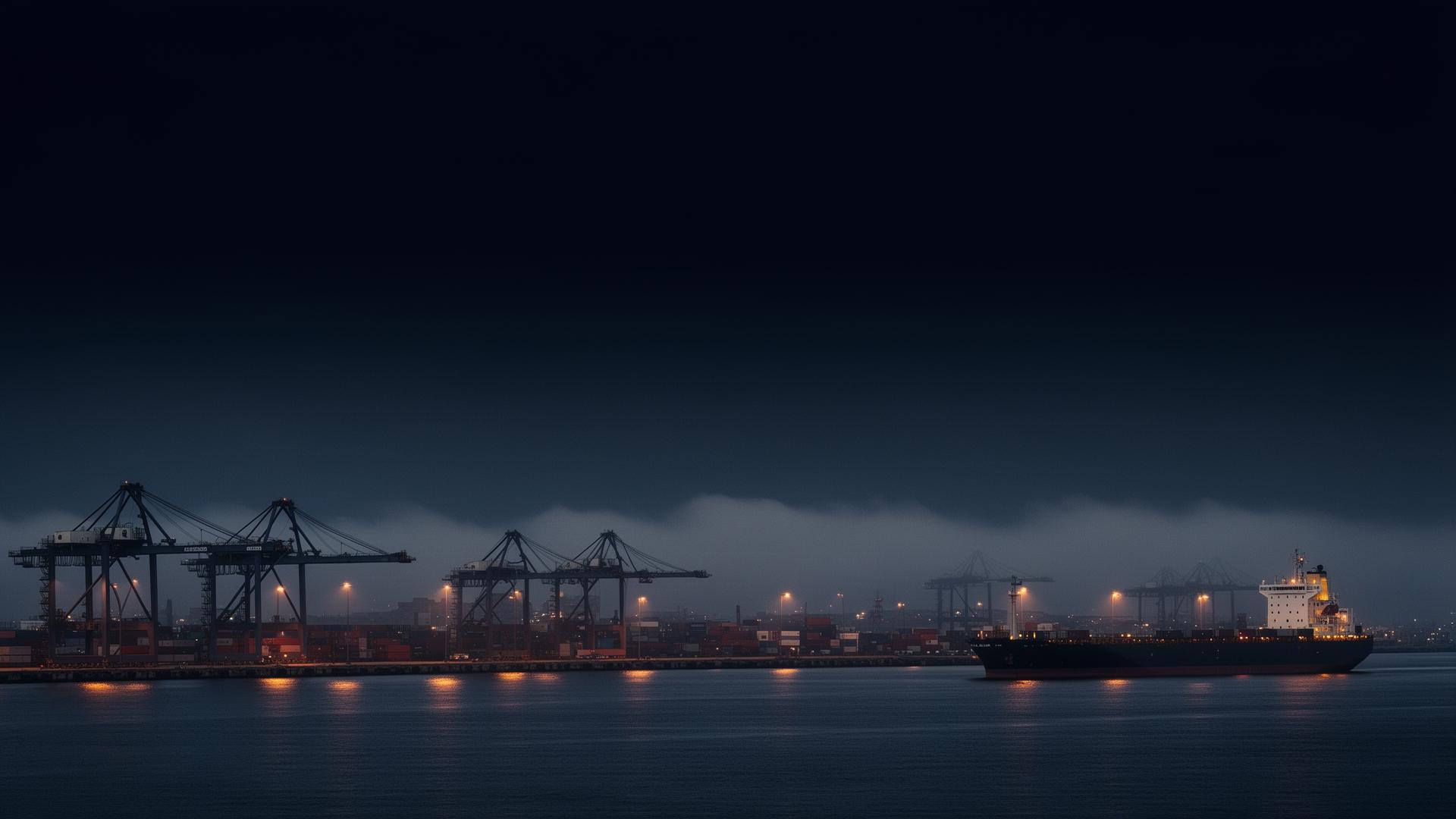
Cameroon operates two major ports — Douala (primary, container) and Limbe (secondary, breakbulk). Douala is one of the largest ports in the region and is congested and operationally stressed. Maritime spatial planning is underdeveloped.
The blue-economy opportunity in Cameroon is minimal in the near term. Fisheries enforcement and IUU detection could in principle attract Norwegian AI capability, but government funding and institutional capacity are lacking. The primary value is oil-and-gas centred.
The diplomatic and regional corridor
Norway has no resident embassy in Cameroon; diplomatic affairs are handled by the Norwegian embassy in Abuja, with an honorary consulate in Yaoundé. The Norwegian development footprint is light compared with West African engagement. Equinor exited Cameroon decades ago. Yara operates in fertiliser and agricultural distribution. The Norwegian diaspora in Cameroon is small.
The Nordic diplomatic corridor in Cameroon is narrow. The entry path must be operator-centric (Perenco) or through established Western industry networks. Cameroon's security risks and governance unpredictability limit attractiveness as a diplomatically led play.
China is deeply invested in Cameroon through infrastructure finance and resource extraction. Russia has increased military presence in the wider Sahel region. Turkey has modest arms-supply relationships. India is active in IT and pharmaceuticals.
Cameroon is an ECCAS member and participates in CEMAC. It is an AU member and an EITI signatory, though EITI reporting is delayed and compliance is mixed.
What Saga sees
Rio del Rey is mature, with natural aquifer influx and water-cut acceleration. Perenco is the capable operator but conservative in capex allocation. A mechanical-multilateral or water-shutoff completion pilot is plausible in principle but faces two headwinds: Perenco's cost-reduction mindset and limited discretionary budget, and the security backdrop, which makes offshore crew rotation unpredictable.
A near-term entry path requires de-risking operational feasibility and obtaining SNH support for technology adoption. Perenco's drilling programme signals some appetite for production stabilisation, but budget and security friction will slow decision cycles.
Cameroon is a patient market. If the Anglophone conflict de-escalates and Perenco signals capex expansion, deal probability increases materially. Gas-to-industry expansion and Yoyo-Yolanda cross-border FID are secondary plays, deeply contingent on commercial and political terms.
How we work in Cameroon
Saga's approach in Cameroon is operator-centric and selective. We maintain arm's-length visibility into Perenco's organisational structure and technical appetite. For a Norwegian principal, we provide market-entry strategy emphasising risk mitigation, operator due diligence and quiet positioning ahead of any capex recovery.
Cameroon is not a near-term priority market. We recommend watch-list status. We will monitor for de-escalation signals and Perenco capex recovery, and will escalate only if material change in security or operator strategy occurs.
At a glance
- Population: ~28 million
- Hydrocarbons: Oil and gas; Rio del Rey as the producing anchor; small LNG operation
- Principal NOC: SNH (Société Nationale des Hydrocarbures)
- Norwegian footprint: No resident embassy (accredited from Abuja) · honorary consulate Yaoundé · minimal development cooperation · no legacy Equinor operations · limited Yara distribution
- Saga focus areas: Rio del Rey water-shutoff and well-optimisation (low near-term probability) · Gas-to-industry expansion monitoring · Yoyo-Yolanda cross-border FID contingency
Live intelligence — Cameroon
Track deals, operator moves and regulatory signals for Cameroon on Saga's intelligence platform.
Related markets — Central Africa
Continue across the geography
← Previous · East Africa
Uganda
The Lake Albert oil project moves toward first oil. EACOP financing has been controversial; Chinese operators are central to the development phase. Beyond upstream sits Lake Victoria, where a Norwegian-led blue-economy play has space.
Next · Central Africa →
Chad
Chad is covered by Saga's Central Africa partner, working with our Cape Town and Stavanger offices. Contact us for a briefing on current operator activity and local-content requirements.
Start with a screening
Have a candidate well, asset or project in Cameroon? Send it to us and we will return a written screening within ten working days.