South Africa · Aquaculture
Blue economy & aquaculture in South Africa.
A focused read drawn from Saga's full South Africa country profile — operators, the technical opportunity, and the corridor.
Blue economy & aquaculture
South Africa has the most developed blue economy on the continent. The wild-capture fishery lands roughly 600,000 tonnes a year — hake the anchor species, with horse mackerel, sardine, anchovy and tuna — and is regulated through total-allowable-catch and rights-allocation regimes administered by DFFE. The deep-sea trawl fishery is MSC-certified for hake and is the most institutionally mature in the SADC region. Saldanha Bay on the West Coast is the centre of the country's marine aquaculture: abalone is the dominant cultured species, with fourteen commercial farms producing roughly 1,650 tonnes a year worth around R1 billion, alongside a smaller mussel and oyster sector in Saldanha Lagoon and Algoa Bay. Cage-based finfish at scale has not yet landed; trial sites for yellowtail and dusky kob exist but the regulatory and biosecurity framework is still being built.
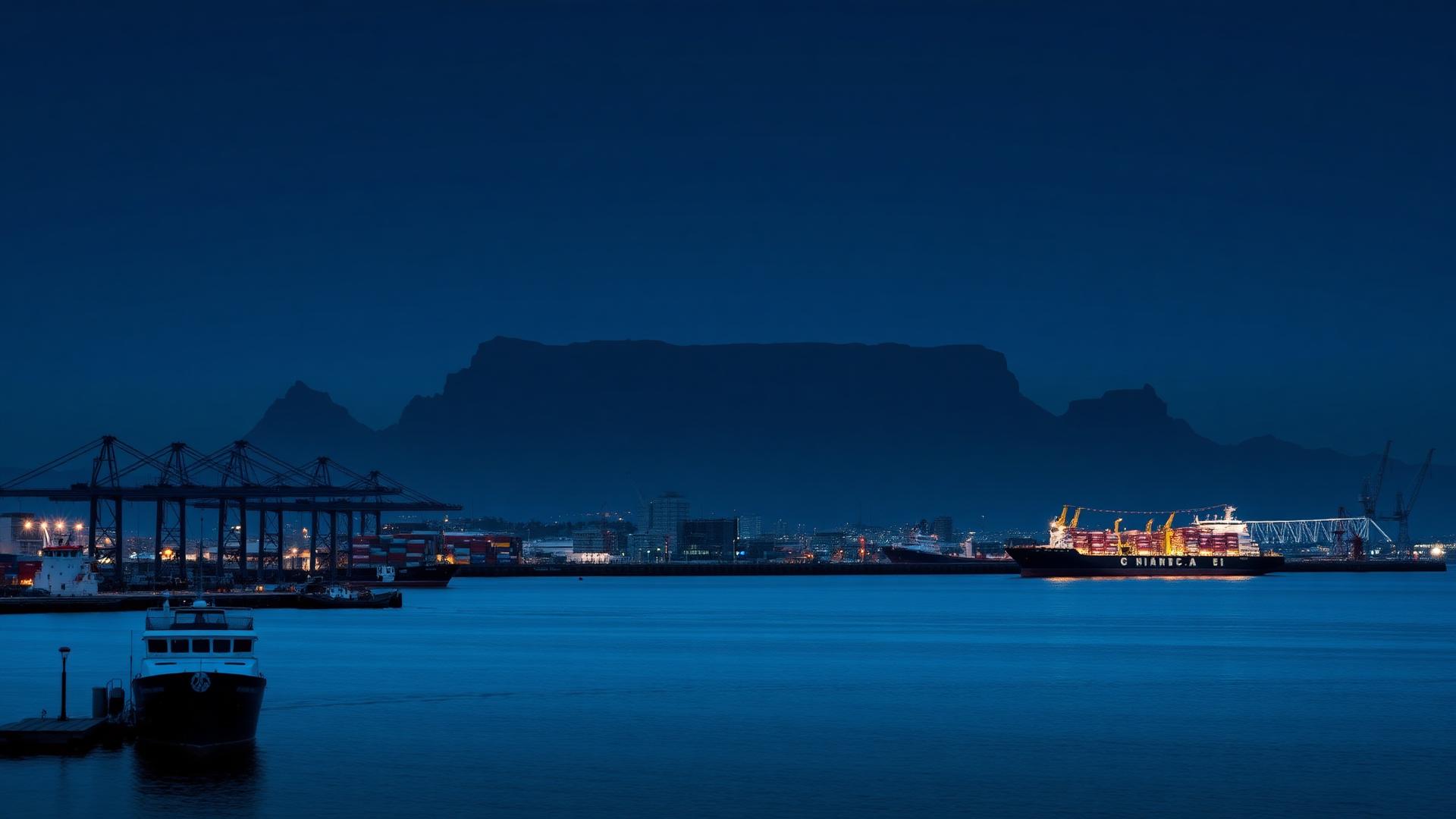
The ports are the other half of the blue-economy story. Cape Town and Durban are the two natural service hubs for the Atlantic and Indian Ocean offshore industries, with Saldanha Bay specialised in iron-ore, ship-repair and a developing offshore-wind staging brief. Mossel Bay services the southern offshore. The intersection with oil and gas is direct: any offshore gas development on Block 11B/12B, Block 3B/4B or further east translates immediately into supply-base, ROV, fabrication and decommissioning work routed through Cape Town and Saldanha. For Norwegian subsea, vessel-services and aquaculture-technology companies, South Africa is both a market and a forward base for the rest of the corridor.